Developer
Build and self-host
Install the MIT-licensed engine, record the bundled app, compile it, lint and certify the bundle, then replay it locally. No account or hosted service is required.
Record a repeated browser task once. Replay it locally with no model calls on healthy runs. When the interface changes, OpenAdapt re-resolves from evidence, proposes a reviewable repair, or stops for an operator.
The browser workflow path is Beta and available today. Windows is Experimental; macOS, RDP, and Citrix remain Research. See the maturity matrix.
Choose your path
Developer
Install the MIT-licensed engine, record the bundled app, compile it, lint and certify the bundle, then replay it locally. No account or hosted service is required.
Automation & operations
Subscribe, record a browser workflow, inspect the compiled program and reports, then operate deterministic runs from the hosted control plane. Desktop and remote-display backends remain separate validation paths.
Regulated enterprise
Define identity coverage, effect verification, artifact sanitization, and the runtime data boundary for a consequential workflow before it enters production.
Process
A demonstrated task becomes a reviewable program, not a prompt that a model reinterprets on every run.
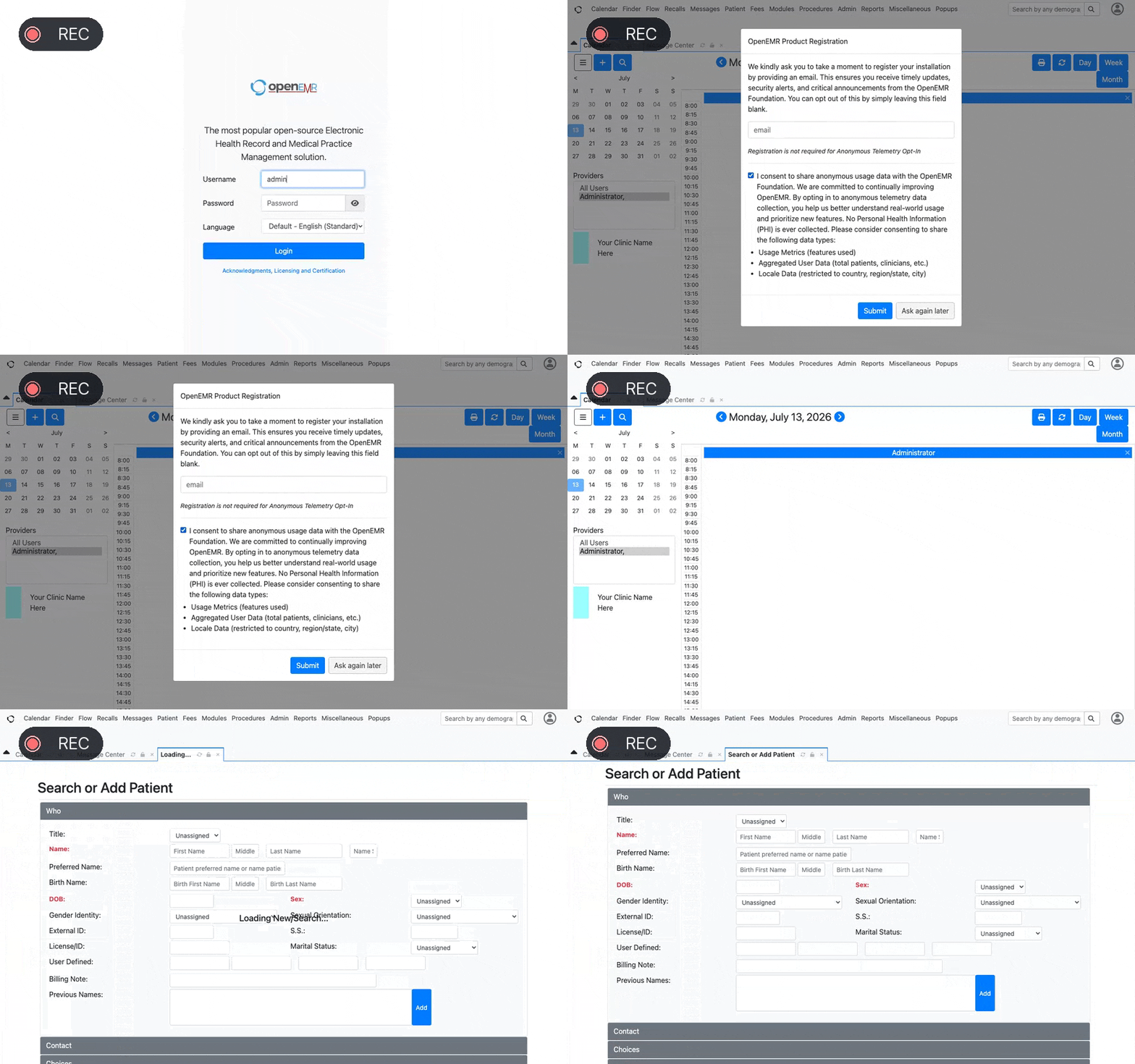
Do the task once. OpenAdapt watches your screen and your clicks.
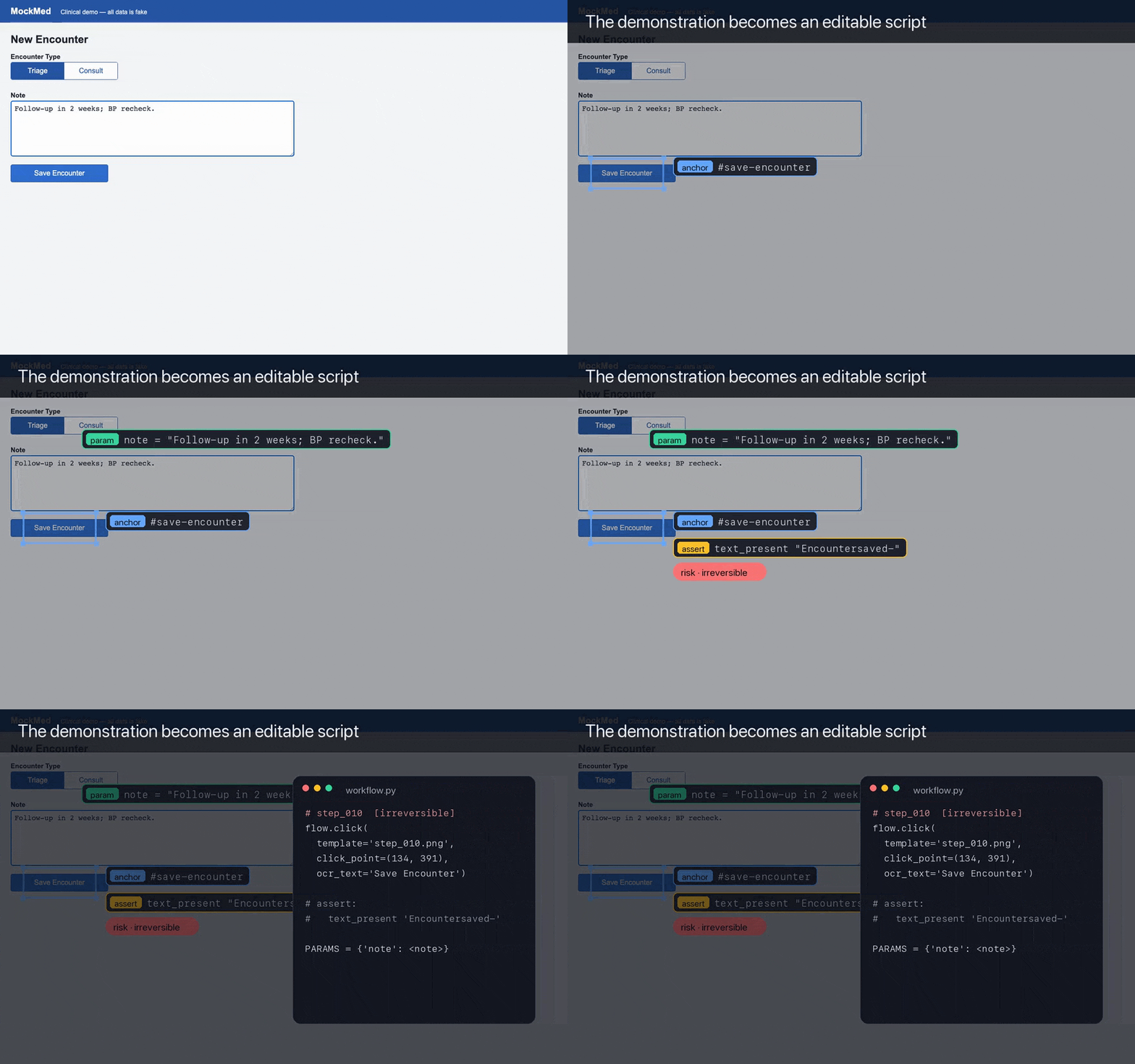
Your recording becomes a script you can read, edit, and reuse.
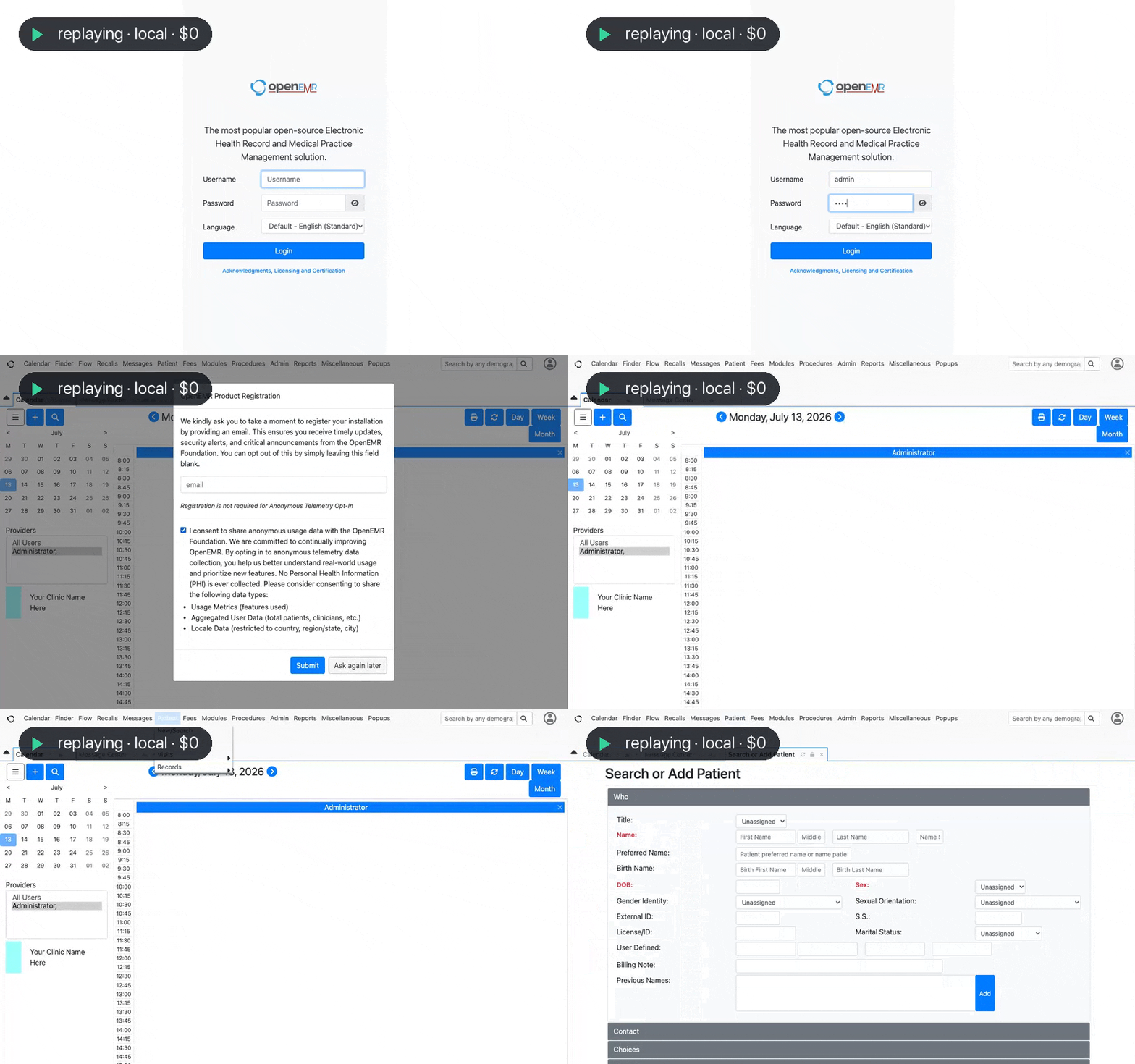
Healthy runs execute the compiled steps locally without a model call.
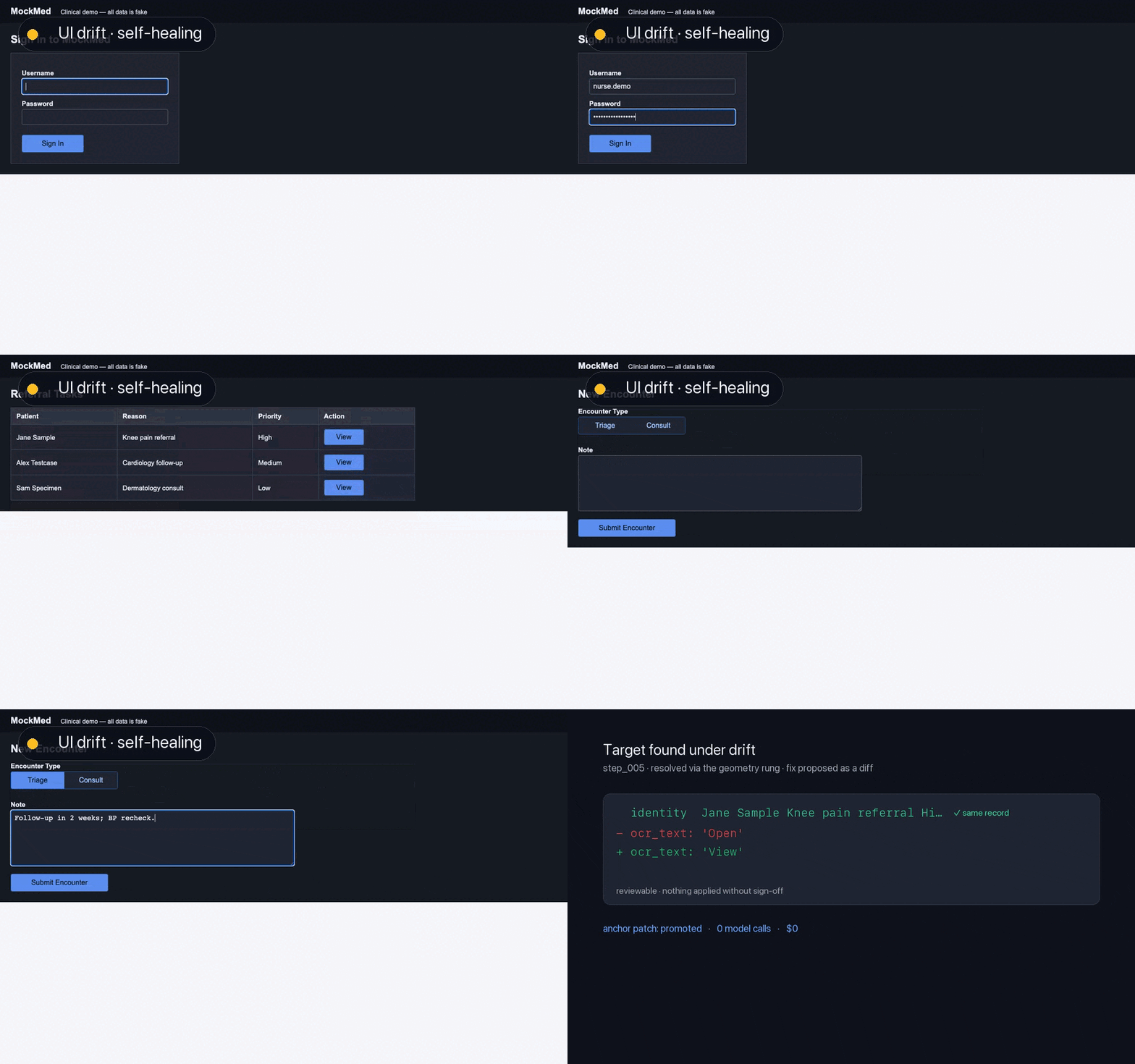
Under drift, deterministic evidence re-finds the target, an optional model proposes a repair, or verification refuses to continue.
Configured postconditions and effects are checked, and every run records what happened, changed, or halted.
UI drift
OpenAdapt is not an unconstrained agent. Drift ends in one of four explicit outcomes, each visible in the run report.
Automatic
Structure, templates, OCR, and geometry try to re-find the recorded target. No model is required. A changed anchor is saved as an auditable bundle diff.
Optional
If deterministic evidence is insufficient and a model is configured, it can propose a target or confirm limited visual state. The model can be wrong; identity, policy, and postcondition gates still decide whether execution continues.
Operator path
A halt produces evidence for an operator. The CLI can teach a correction, and durable mode can checkpoint verified progress for authenticated approval and resume.
Unsupported drift
If no configured path can establish the target or expected result, the workflow stops. OpenAdapt does not claim general adaptation to arbitrary application changes.
Availability and refusal depend on recorded evidence and configuration. Identity checks cover armed steps only; system-of-record verification requires declared effects and a configured verifier. Read the measured limits.
Product maturity
Code presence does not imply production readiness. This matrix separates the browser launch path from experimental backends and states the evidence boundary for each control.
| Capability | Status | Evidence boundary |
|---|---|---|
| Browser recording and replay | Beta | Shipped end to end and exercised against a real third-party web app. Evidence |
| Linting and certification | Available · opt-in | CLI policies report or refuse configured coverage gaps; an uncertified bundle can still run. Evidence |
| Identity verification | Available · partial coverage | Enforced on armed steps only. Unarmed clicks have no identity check. Evidence |
| System-of-record effects | Available · configuration required | Requires manually declared effects and a deployment-specific verifier; screen checks alone cannot prove a write. Evidence |
| Human teaching and resume | Experimental CLI | Teach, authenticated approval, checkpoint, and resume paths exist; the hosted operator experience is launching on the browser path. Evidence |
| Windows UIA | Experimental | Locally demonstrated on a Windows-on-ARM VM, not a validated production integration. Evidence |
| macOS native workflows | Experimental | Capture and accessibility building blocks exist; no supported end-to-end native product path is claimed. Evidence |
| RDP | Research spike | Protocol adapter and mocked tests exist; live target and application validation remain pending. Evidence |
| Citrix | Research spike | Pixel-only remote-display analog, not a validated Citrix integration. Evidence |
| Desktop authoring UI | In development | Not the current self-serve production path; use the CLI/browser workflow for evaluation. Evidence |
| Managed hosted execution | Launching · browser | Configured Stripe checkout, account onboarding, attested bundle ingest, browser runner, structural reports, replacement activation, entitlements, and metering form the launch path. Authoring and repair validation remain local. This status does not include desktop or Citrix execution. |
| Artifact sanitization and review | Launch gate | Upload accepts the approved, sanitized derivative identified by its manifest hash. Unknown or unresolved content is refused. Recordings with changed execution content require local parameterization and bundle validation; runtime observations can still reintroduce PHI and require a declared trusted boundary. Evidence |
| Cross-engine hosted validation | Launch gate | Runnable bundle upload requires exact recording/bundle provenance, strict lint, policy certification, derived risk class, successful matching replay, and a one-time challenge. This is operator self-attestation, not independent certification. Evidence |
| On-prem enterprise deployment | Available by scope | Customer-controlled deployment is the path for workflows whose runtime necessarily exposes regulated data. Substrate, effect verifier, update, support, and compliance responsibilities are documented per deployment. |
Status reflects public evidence in openadapt-flow and its published limits. It is a product-readiness statement, not a security certification.
Measured evidence for repeated browser work
In a bounded browser benchmark, both approaches completed every tested run. OpenAdapt's median compiled replay was 7.6× faster and incurred no model cost on healthy runs. This benchmark measures speed and model cost for one task; it is not a production reliability claim.
Safety
OpenAdapt can require identity and effect evidence before a consequential step, then halt for an operator when verification is ambiguous. That protection applies only where the workflow is configured to check it; a success screen alone is not proof that a write reached the right system or record.

Industries
Record the workflow once and OpenAdapt turns it into an inspectable program your team can run and review on its own machines. Healthy browser replay makes no model calls; consequential workflows still require explicit identity, effect, policy, storage, and retention configuration.
Optional PII/PHI scrubbing covers configured sharing paths, not every raw artifact.


We first check the substrate, verification boundary, and measurable outcome. If the workflow fits, we can scope a paid design-partner pilot in your environment.
Qualify a workflowRunning the same workflow hundreds of times on software you can't API into?
OpenAdapt is launching managed browser execution now, with the same deterministic compiler available under MIT for local and customer-controlled deployment.
Choose a launch path →Launch options
The engine is MIT-licensed. Hosted browser execution is launching with subscription checkout now. When configured, this page reads the offer directly from Stripe; Checkout confirms the same price and billing period before payment.
Open Source
For builders and self-hosters who want it running on their own machines.
pip install openadapt-flow
Hosted
Subscribe to the hosted browser path. Checkout creates a Stripe subscription and routes you into account onboarding; execution entitlements follow the configured hosted offer.
By subscribing, you agree to the Terms of Service and acknowledge the Privacy Policy.
Enterprise
For consequential workflows that require a customer-controlled data boundary. We qualify the substrate, artifact policy, effect oracle, and operating model before production use.
Commercial launch
The checkout offer covers the browser substrate. Desktop, RDP, and Citrix remain separate validation work and are not silently included in a browser subscription. Regulated deployments are scoped around their actual data and verification boundary.
Stripe is the source of truth for the hosted subscription price. Checkout does not itself promise an SLA, compliance certification, or support for an experimental backend.
Open source
openadapt-flow is the canonical engine. Its browser path records a workflow, compiles it into a reviewable program, and replays it locally with no model calls on a healthy run.
One command installs the OpenAdapt launcher and governed compiler. No account or hosted service is required.
$curl -fsSL https://openadapt.ai/install.sh | sh
Try the whole loop right now against the bundled demo app: record, compile, inspect, certify, replay, and induce known test drift. No account or cloud service. Once it is installed, your workflow data stays on your machine. One heads-up on first run: the first demo-record or replay downloads a bundled Chromium (~150 MB) once, so that step takes a few minutes, and on Linux you may need playwright install-deps first.
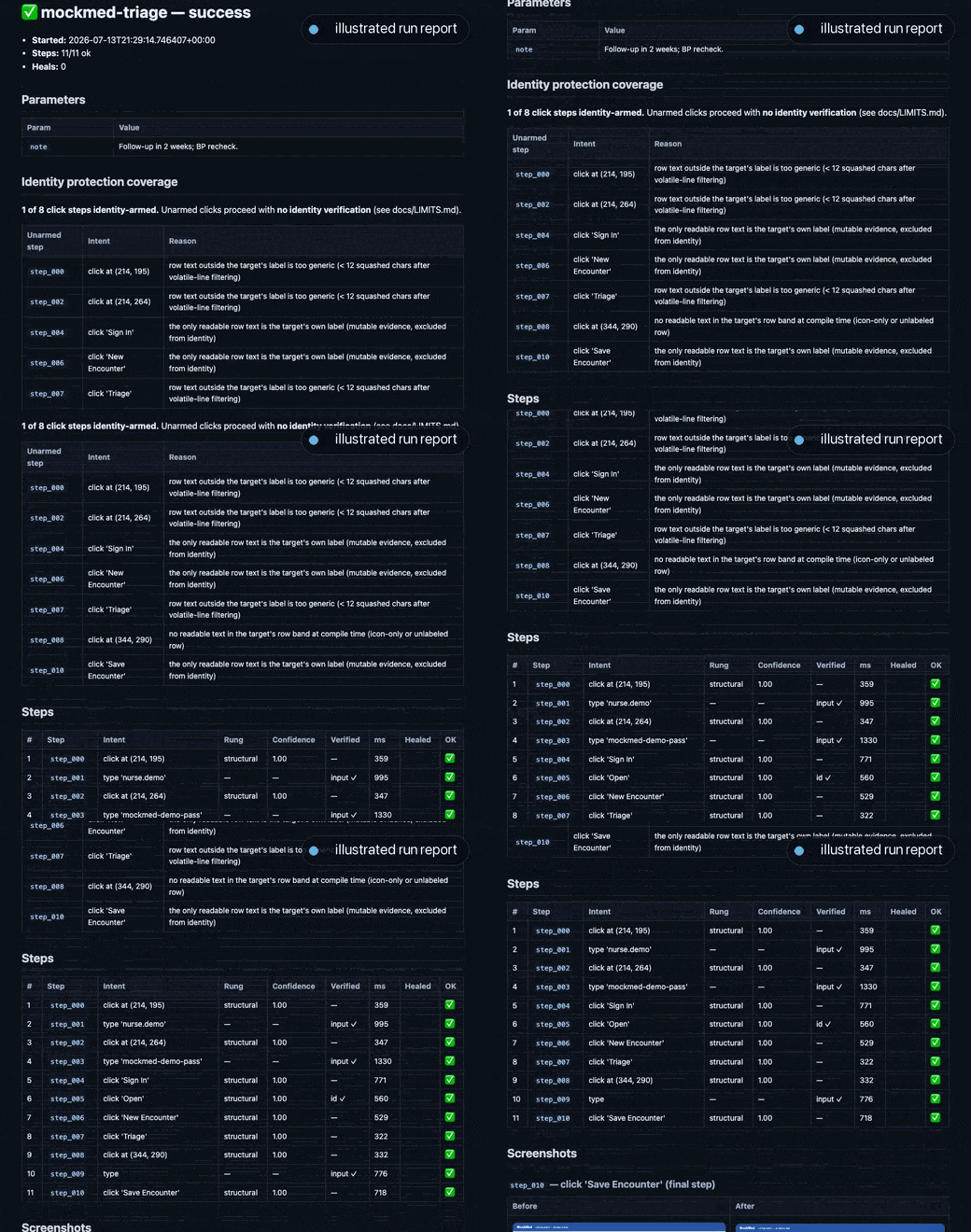
curl -fsSL https://openadapt.ai/install.sh | shInstall OpenAdaptopenadapt flow demo-record --out recRecord yourself doing the taskopenadapt flow compile rec --out bundle --name my-taskTurn the recording into a workflowopenadapt flow lint bundleInspect identity, assertion, and risk coverage gapsopenadapt flow certify bundle --policy clinical-writeEnforce a policy before deploymentopenadapt flow replay bundleReplay it locally, with zero AI callsopenadapt flow replay bundle --drift themeExercise deterministic re-resolution on bundled test driftuv tool uninstall openadaptRemove the launcher when you are finishedEvery replay writes a step-by-step run report: what ran, what it saw, what re-resolved, and what halted. The browser path is the only shipped end-to-end backend today. Source and measured limits on openadapt-flow. Evaluating a regulated workflow? Book a demo.
Historical download statistics for OpenAdapt packages
FAQ
Workflow qualification
Tell us the substrate, repetition, consequence of error, data boundary, and current verification path. We'll tell you whether it fits the shipped browser engine, experimental design-partner work, or neither.
Product updates and hosted launch information. This does not create an account or promise access.